Online Marketing Planner: How to Plan a Full Year of Marketing

A year of marketing works when it’s planned from the business goals down. A marketing calendar turns those goals into campaigns, posts and deadlines, so every week’s work has a reason behind it.
Below: how to build an annual marketing plan, how one manufacturer runs its year, and the online marketing planner tools worth using.
What Is a Digital Marketing Plan?
A digital marketing plan is a document that outlines a business’s online marketing activities for the year: the goals, the channels, the campaigns, the budget and who’s responsible for each task.
At companies with no internal marketing team, it’s usually written by whoever handles marketing alongside another job, often the owner or a salesperson, with input from sales and operations. 72% of Glowtify’s customer accounts have no one dedicated to marketing full time, so the plan has to be simple enough to keep running in a busy week.
A list of social platforms isn’t a plan. A plan ties every activity to a business goal and a deadline.
Why Week-to-Week Planning Fails
Planning week to week feels simpler, but it disconnects the work from the business goals.
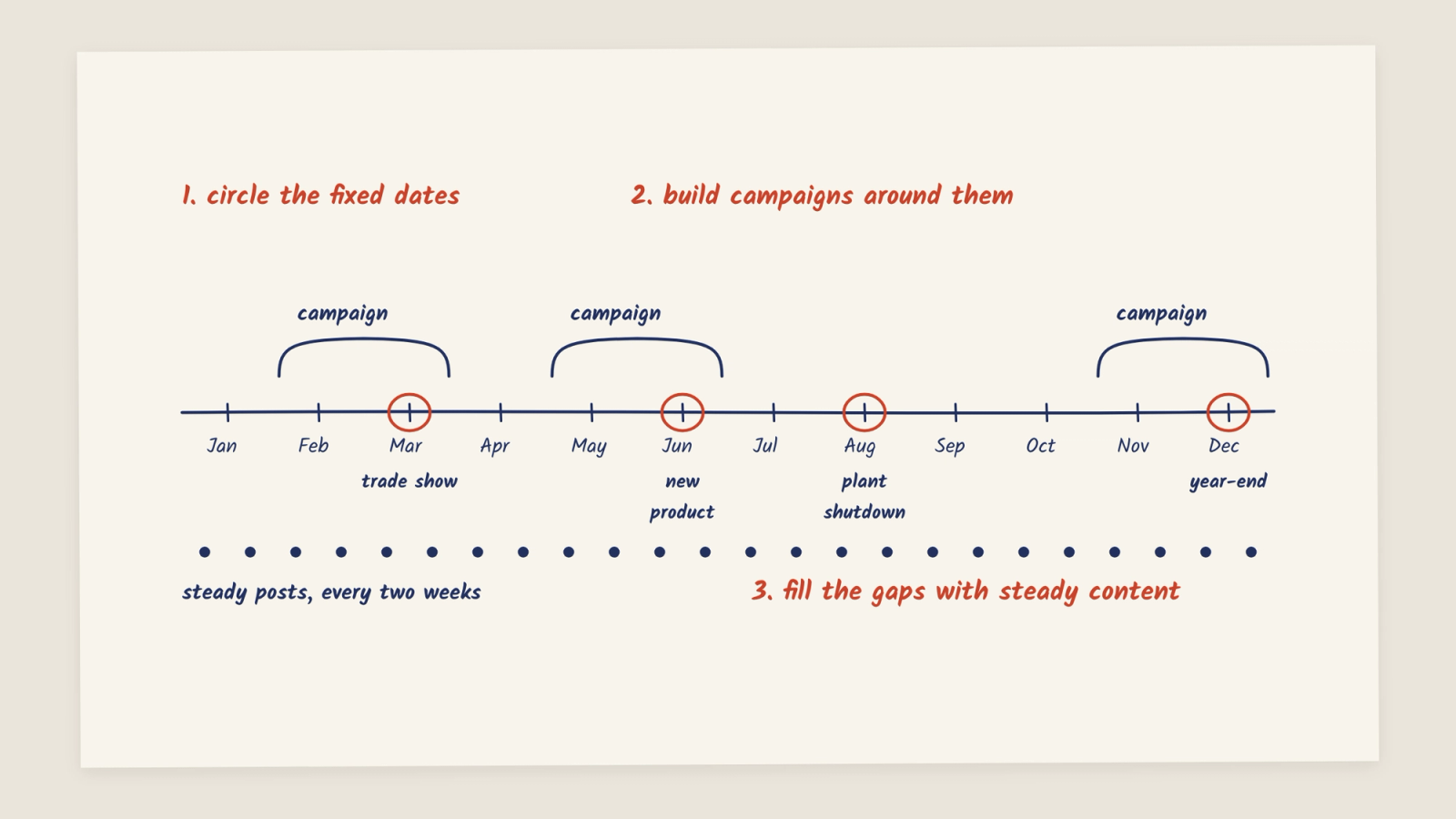
A team might build several web pages in the first week of the month because the schedule allows it, then rush out an email in the second week because a promotion came up. The work keeps moving, but nothing connects one activity to the next.
A full-year plan decides what matters and when it matters. Weekly tasks get easier because they follow decisions made in advance.
The Planning Sequence: How to Start & Where to Go
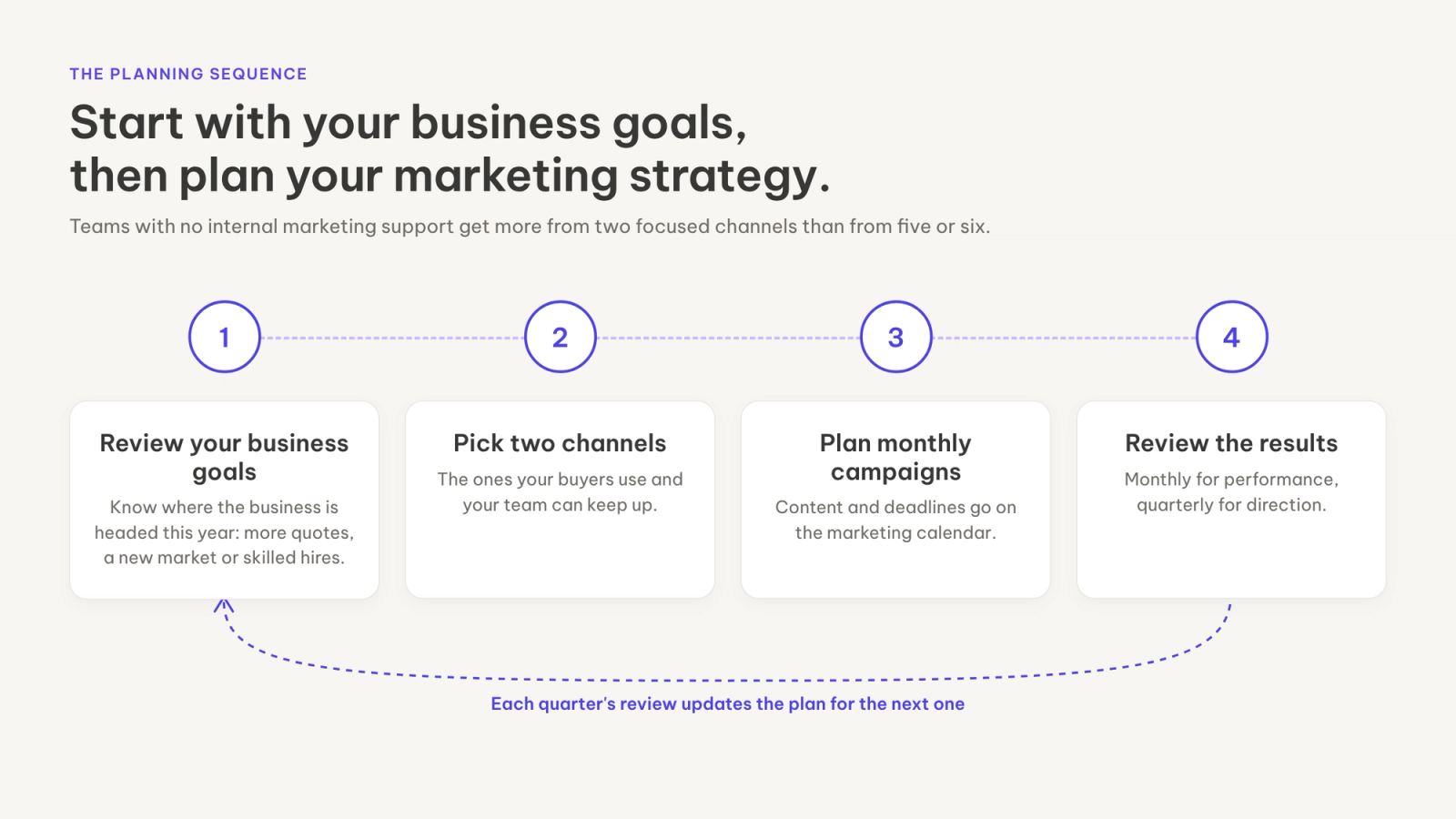
Start from where the business is headed this year: more quote requests, a new market, skilled hires. Your marketing plan works back from those goals, so every channel, campaign and post supports one of them.
Then choose the channels that make sense for your buyers. Teams with no internal marketing support get more from two focused channels than from five or six: there’s only so much time to keep each one active.
Next, plan monthly campaigns and content on a marketing calendar. It gives your team a plan to follow and deadlines to keep.
Finally, review the results: monthly for performance, quarterly for direction. Each quarter’s review updates the plan for the next one.
Glowtify’s marketing strategy and content calendar bring these steps together: the strategy sets the direction, and the calendar organizes the work.
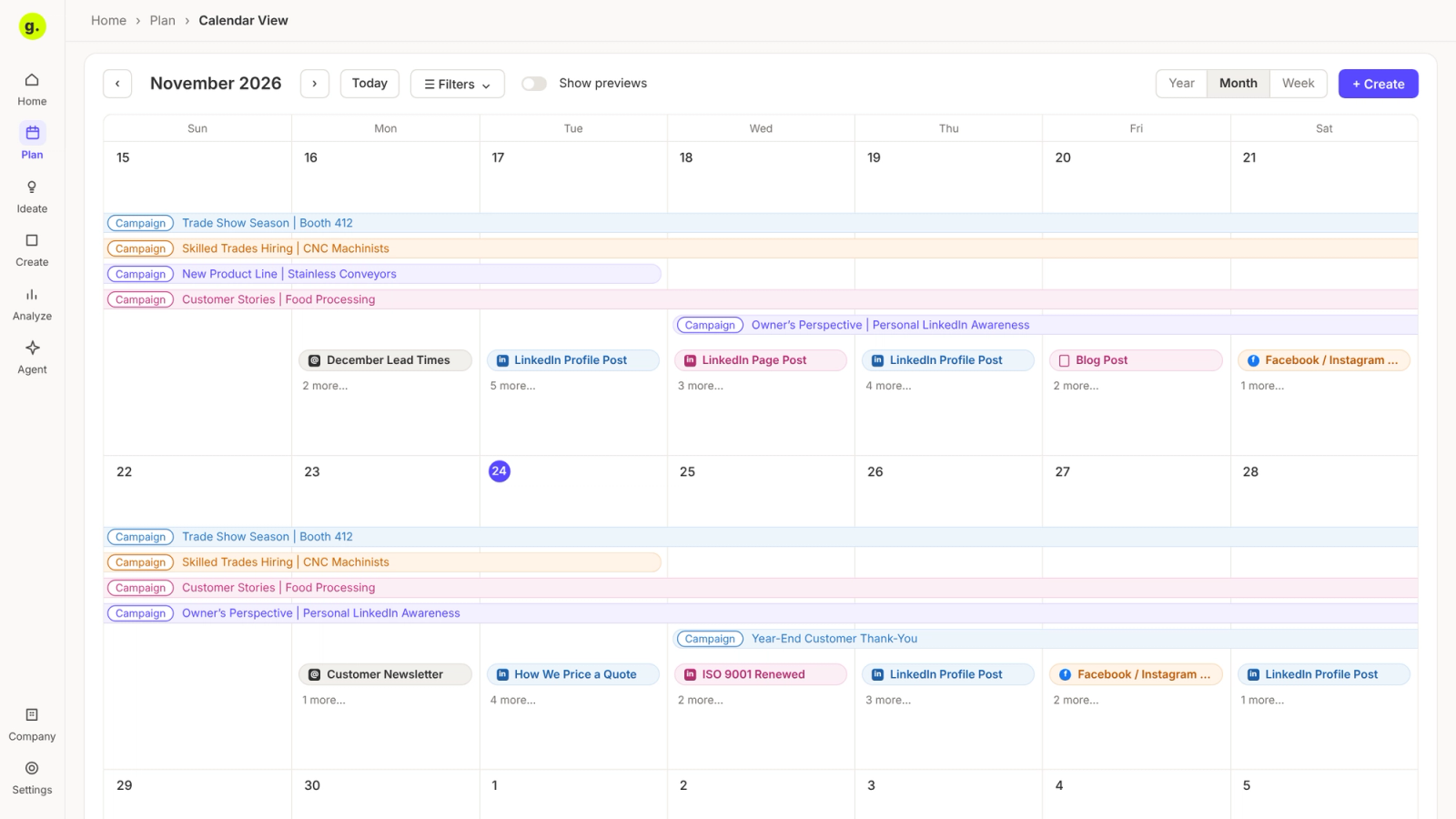
Here’s a sample of Glowtify’s monthly marketing calendar for a manufacturer, with a trade show, a hiring push and customer stories running at once.
Nine Steps to Building Your Online Marketing Plan
This guide focuses on online marketing, so “digital marketing plan” and “online marketing plan” mean the same thing here.
#1 Review Your Business Goals
Before you start thinking about how to market your business online, you must first understand and know your real business goals inside and out. Your marketing goals and objectives flow downstream from that.
Common marketing goals for companies with no internal marketing team include:
- More quote requests
- Better-qualified leads for sales
- Visibility in a new market or region
- Applications for hard-to-fill roles
Make each one SMART:
- Specific: it’s clear, such as “20 quote requests from food processors.”
- Measurable: you can track progress toward it.
- Achievable: it’s realistic for the time and people you have.
- Relevant: it supports where the business is headed.
- Time-bound: it has a deadline.
#2 Know Who Signs Off on a Purchase
A B2B purchase rarely comes down to one person. An engineer specifies the part, purchasing compares suppliers, and an owner or plant manager signs off.
Write down who those people are at your best customers and what each one needs to see before moving forward.
#3 See What Buyers Find About Your Competitors
Search for what your buyers search for, on Google and in ChatGPT, and note who comes up. Look at what those competitors publish: case studies, certifications, shop-floor video.
The gap is whatever buyers can find about them and can’t find about you. Here’s how to close it in AI search.
#4 Pick Two Channels
Choose the channels your buyers use and your team can keep up every week. For most manufacturers, that’s LinkedIn and email.
#5 Map How a Buyer Becomes a Customer
Most manufacturers don’t sell online. A buyer finds you, requests a quote or calls, and sales takes it from there.
Make each step easy to take and easy to measure: a quote form buyers can find in one click, and GA4 key events that show which posts and emails produced quote requests.
#6 Give Buyers What They Check Before They Call
Buyers vet you on the website before they reach out. Make sure it shows what you make, the industries you serve, your certifications and your capacity.
#7 Set the Budget by Quarter
Whoever handles marketing needs a firm understanding of the budget and costs. Split the budget between what your team makes and what you pay for: tools, ads, video, outside help. Plan the spend by quarter so it follows the year’s campaigns.
#8 Use Tools That Save Hours, Not Tools Built for Big Teams
You need three things: a marketing calendar, the CRM your sales team uses, and GA4. Compare nine marketing calendar tools to find the one that fits your team.
#9 Review and Adjust
Track the numbers tied to your goals in GA4: sessions, quote requests and the key events that show which posts and emails produced leads. Review results every month and adjust the plan every quarter. The sections below show what to check in each.
How a Manufacturer Plans Its Marketing Year
Take a manufacturer that markets on two channels, LinkedIn and email. Each quarter gets one goal, and both channels work toward it.
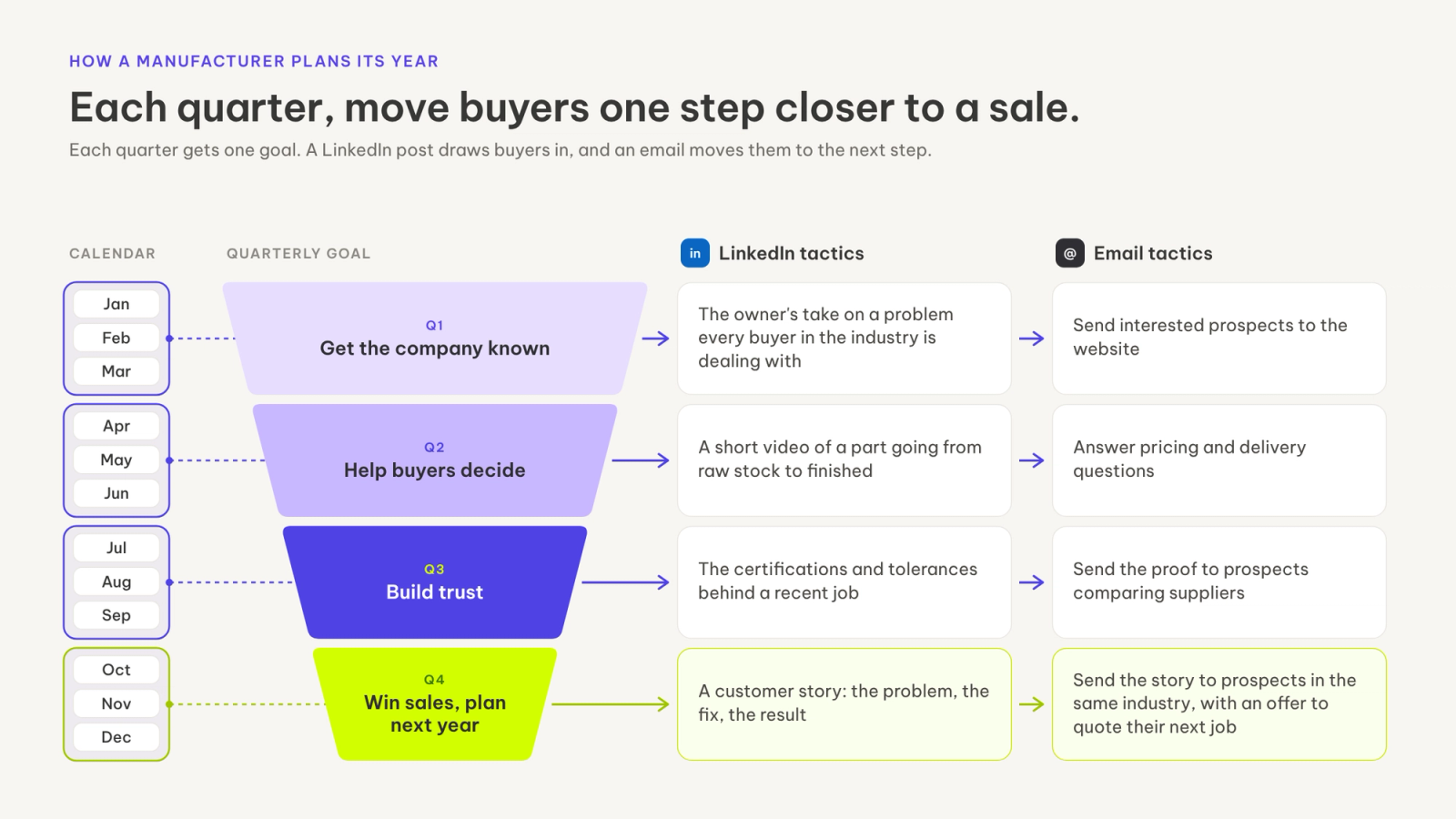
Q1: get the company known. The owner posts a clear take on a problem every buyer in the industry is dealing with, such as lead times, tariffs or finding skilled labour. Posts from people reach further than posts from a company page, and a strong opinion gets shared. Email sends interested prospects to the website.
Q2: help buyers decide. A short video shows a part going from raw stock to finished, so buyers can see what the shop can actually do. Email answers the questions that come next: pricing and delivery times.
Q3: build trust. A post shows the certifications and tolerances behind a recent job. Email sends that proof to prospects who are comparing suppliers.
Q4: win sales and plan next year. A customer story lays out the problem, the fix and the result. Email sends it to prospects in the same industry, with an offer to quote their next job. At year-end, the team checks which posts and emails brought in good leads and builds next year’s plan around them.
What to Review Monthly vs. Quarterly
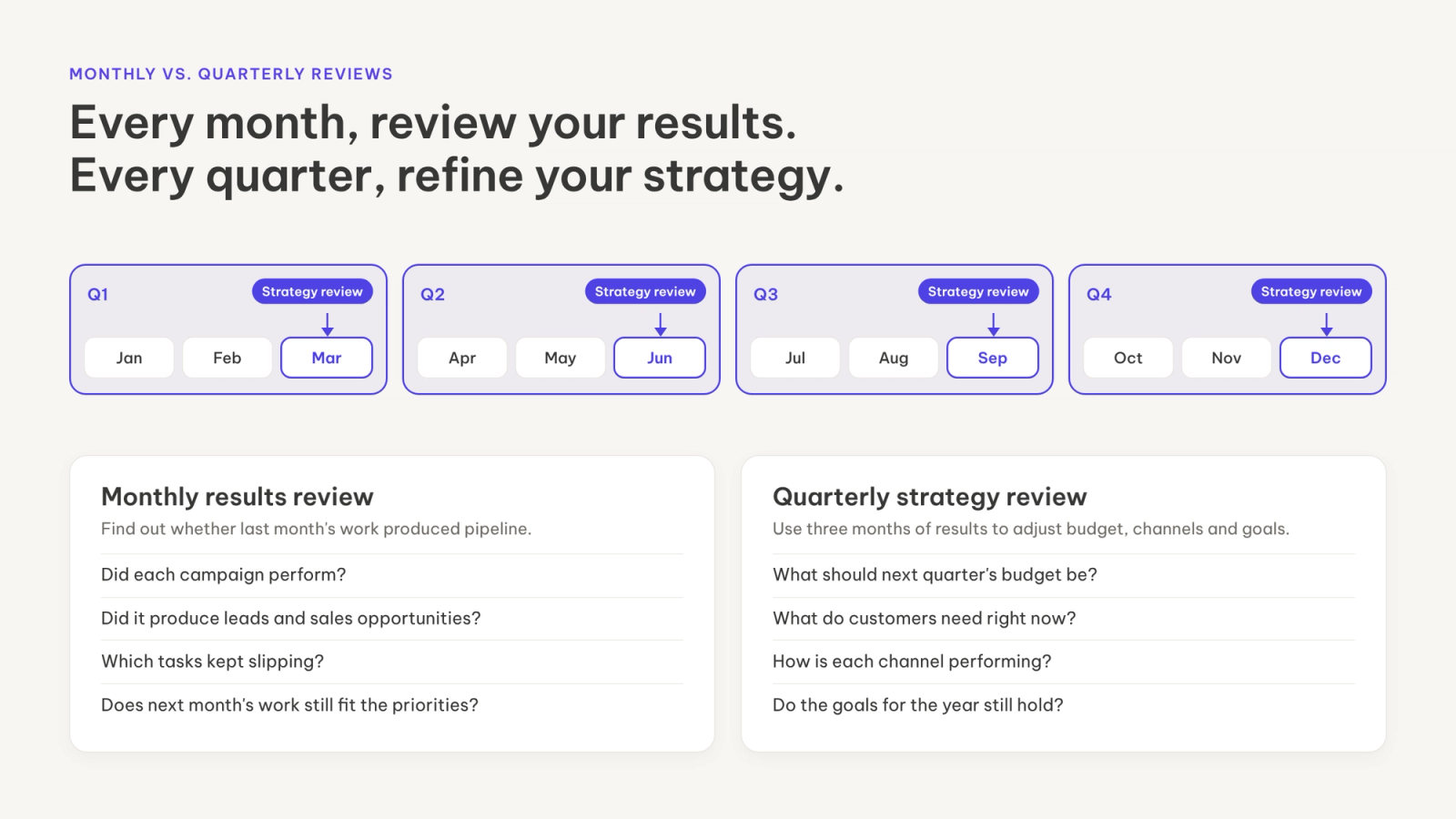
Every month, review your results: whether each campaign performed, whether it produced leads and sales opportunities, which tasks kept slipping and whether next month’s work still fits the priorities.
Every quarter, refine your strategy. In the last month of each quarter, use three months of results to set next quarter’s budget, check what customers need now and see how each channel is performing.
When to Change the Plan
Your annual marketing plan should change when the business’s priorities change or when your goals aren’t being met.
If a campaign keeps underperforming, or you’re no longer reaching the right buyers, it’s time to adjust.
You don’t need to rewrite the whole plan every time something changes. Keep the main goals and adjust the campaigns. That keeps your marketing planning on track.
Top Online Marketing Planner Software
The right online marketing planner keeps the year’s goals, campaigns and deadlines in one place. See how nine marketing calendar tools compare, from simple calendars to platforms that plan and create the content too.
Never Let Your Online Marketing Planner Become Stagnant
Once your online marketing plan is in place, review it regularly with sales and leadership, the people who know where the business is headed. Set aside time each quarter to update it, so the plan keeps pointing where the business is going.