AI Agents in Marketing: What They Do and Where They Help
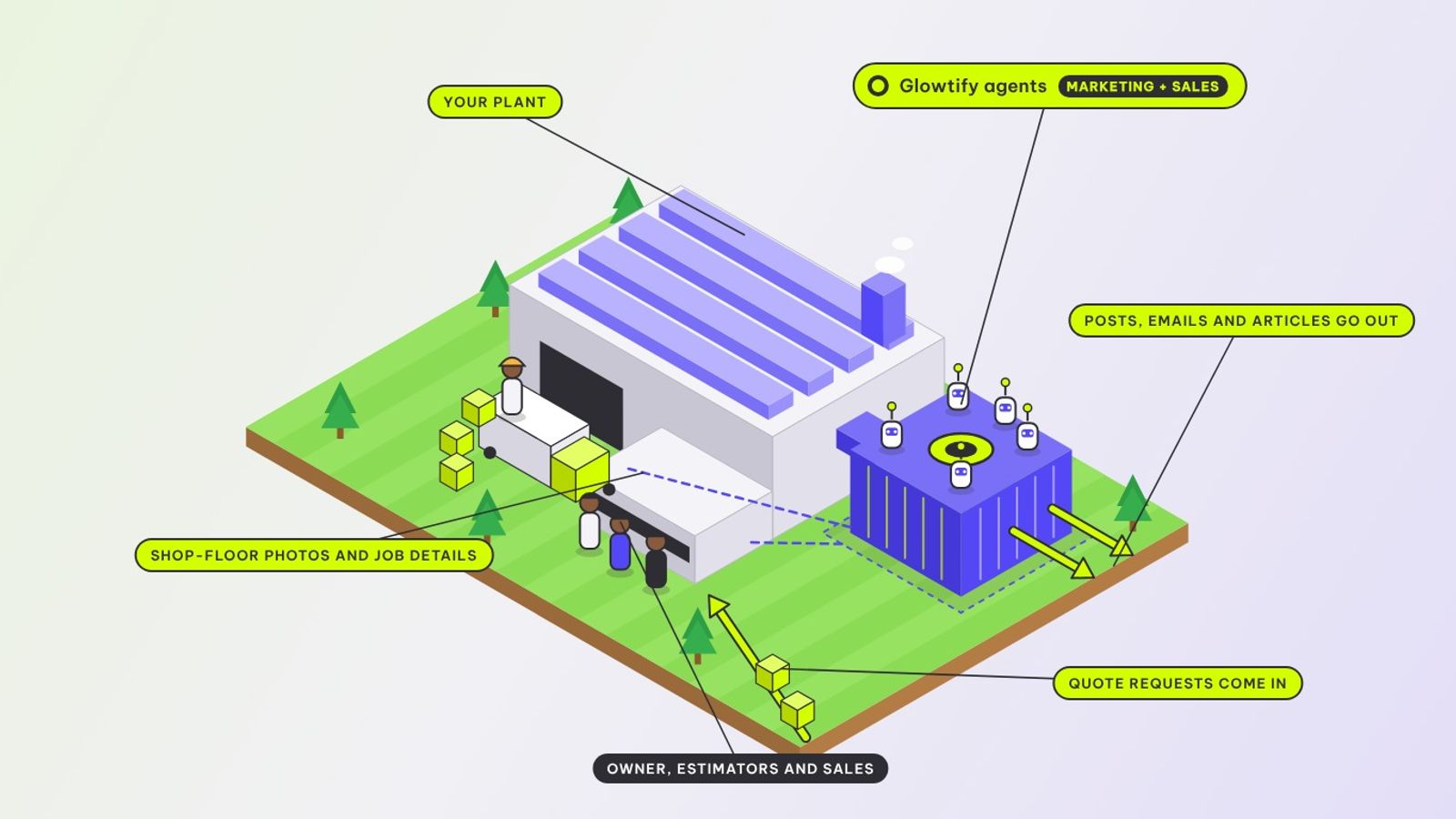
Table of Contents
AI agents can now research a topic, draft a post or shift an ad budget without someone guiding every step. For a team with no internal marketing support, that sounds like extra hands. It is, as long as you know what AI agents do well, where they still get things wrong and where a person has to sign off.
What an AI Agent Is, in Plain Terms
An AI agent is software that works toward a goal on its own: it gathers information, decides what to do next and takes action, without a person directing each step. IBM describes agents the same way: systems that interact with their environment to complete tasks for a user.
That’s the difference from the automation most teams already use. An automation follows a fixed rule: when someone fills out a form, send this email. An agent works through several steps. It reviews the request, decides which response fits, drafts it and recommends what should happen next.
In marketing, agents help sort audiences, personalize content, answer customer questions and adjust campaigns as results come in.
Eight Types of AI Agents
Agents are grouped by how they make decisions. Most marketing tools combine several of these types.
1. Simple Reflex Agents
They react to a specific input with a set action, and don’t consider past events or what happens next. Example: a thermostat that turns on the heat when the temperature drops below a set level.
2. Model-Based Reflex Agents
They keep an internal picture of their surroundings, so they can handle situations where an immediate reaction isn’t enough. Example: a robot vacuum that maps a room before cleaning it.
3. Goal-Based Agents
They compare possible actions and pick the one that gets them closest to a goal. Example: a GPS that finds the fastest route to a destination.
4. Utility-Based Agents
They score each possible outcome and choose the best overall result, not just one that meets the goal. Example: a self-driving car balancing safety, fuel use and travel time.
5. Learning Agents
They improve with experience: one part updates what the agent knows, another makes the decisions. Example: a support chatbot that answers questions better over time.
6. Multi-Agent Systems
Several agents work together or compete with each other. Example: trading algorithms competing in financial markets.
7. Autonomous Agents
They operate on their own in changing conditions and adjust without a person stepping in. Example: a drone that reroutes around obstacles in real time.
8. Hybrid Agents
They combine set rules with learning to make better decisions. Example: Siri or Google Assistant, which follow set commands and learn from how you use them.
What Agents Do Well in Marketing Today
For a small team, marketing AI agents are most useful on work that repeats: research, analysis and preparing content. They work through the steps and hand back something a person can review. Here’s where they help most today.
#1 Answering Customer Questions
Chat agents read a customer’s question, find the answer in your product information and reply in real time on your website or messaging channels. The better ones learn from each conversation and hand the customer to a person when a question goes beyond what they know.
#2 Adjusting Ad Spend as Results Come In
Google Ads and Meta’s Advantage+ use agents to place ads, shift budget and refine targeting as results come in. They find the ads that perform, adjust bids and move money away from what isn’t working.
#3 Scoring Leads for Sales
Tools like HubSpot and Marketo look at behaviour, past interactions and company data to predict which prospects are closest to buying. Agents score each lead, so sales can call the most promising ones first.
#4 Planning and Drafting Content
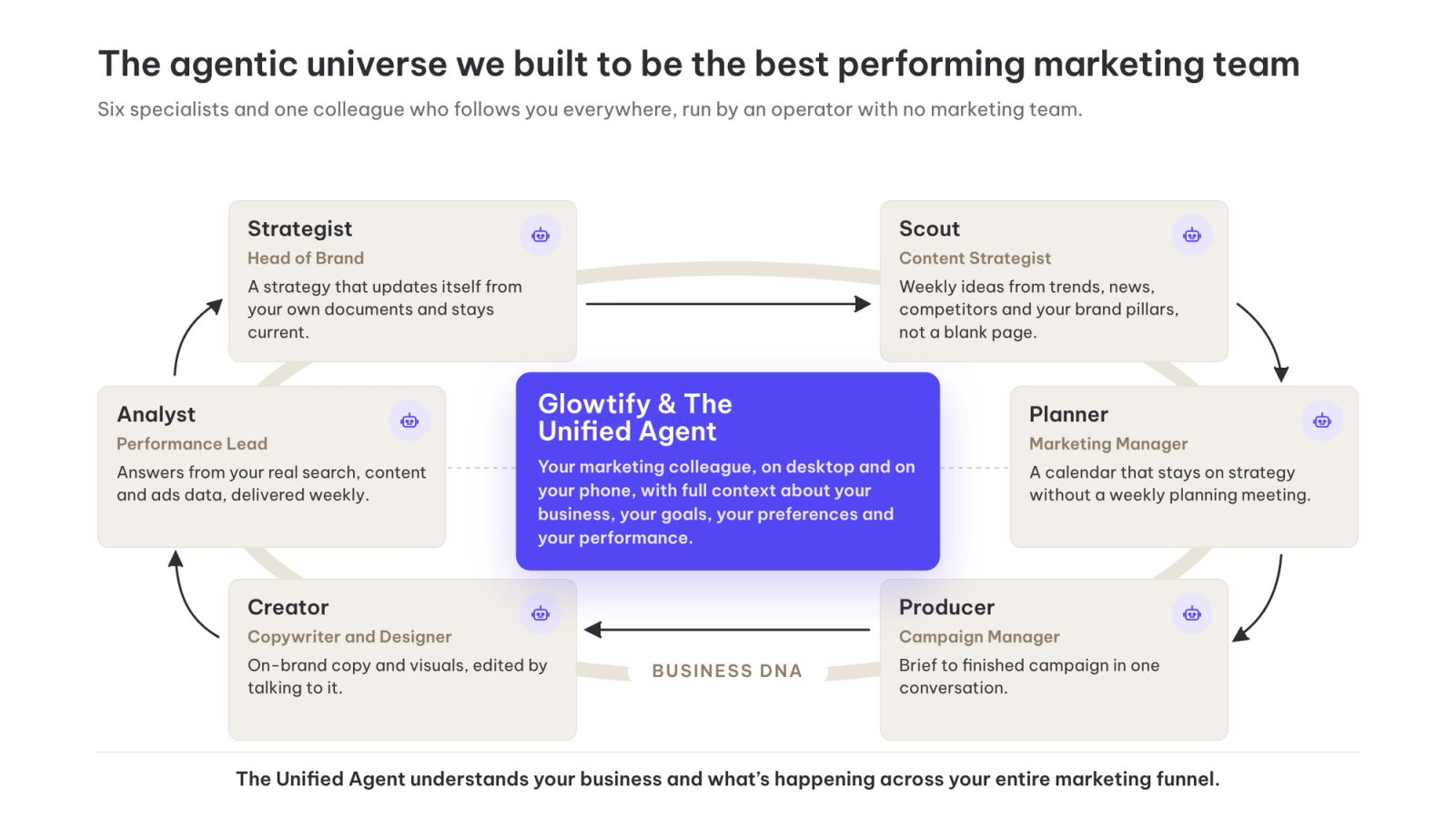
Glowtify’s agents suggest ideas each week from trends, news, competitors and your brand pillars, build campaign briefs and draft the posts, based on your audience and your results. For a team with no internal marketing support, that takes research, drafting and other repeat work off the list, while a person stays in charge of what goes out.
Glowtify has developed several agents based on in-depth marketing and growth expertise. These agents understand and interact with one another, allowing your marketing to operate from the same shared business context, like a seasoned employee you can always rely on.
What They Still Get Wrong
Agents can state wrong information with confidence, misread context or make recommendations from incomplete data. They can also follow your instructions exactly and still produce something that doesn’t fit your goals, your buyers or your standards.
In marketing, that matters. One wrong product spec, unsupported claim or badly worded customer message changes how buyers see your business. An agent finishing a task doesn’t mean the result is ready to use.
Agents also only know what they can access. If your product information is outdated or incomplete, the output will be too. Test an agent on one specific task and check the results closely before you give it more.
Where a Person Has to Stay in the Loop
Any time an agent produces something a customer will see, or takes an action that affects the business, a person should check it first. The agent researches, drafts or suggests. A person checks the facts, makes changes and approves the final version.
In Glowtify, the Unified Agent keeps one conversation going from the campaign brief to each post, and approvals are built into publishing: reviewers get reminders, and your team is alerted if approved content misses its publication date.
Every Glowtify workflow pairs human expertise with specialized agents. Your team sets the strategy and signs off on what goes live, while the agents speed up the research, creation, coordination, publishing and measurement in between.
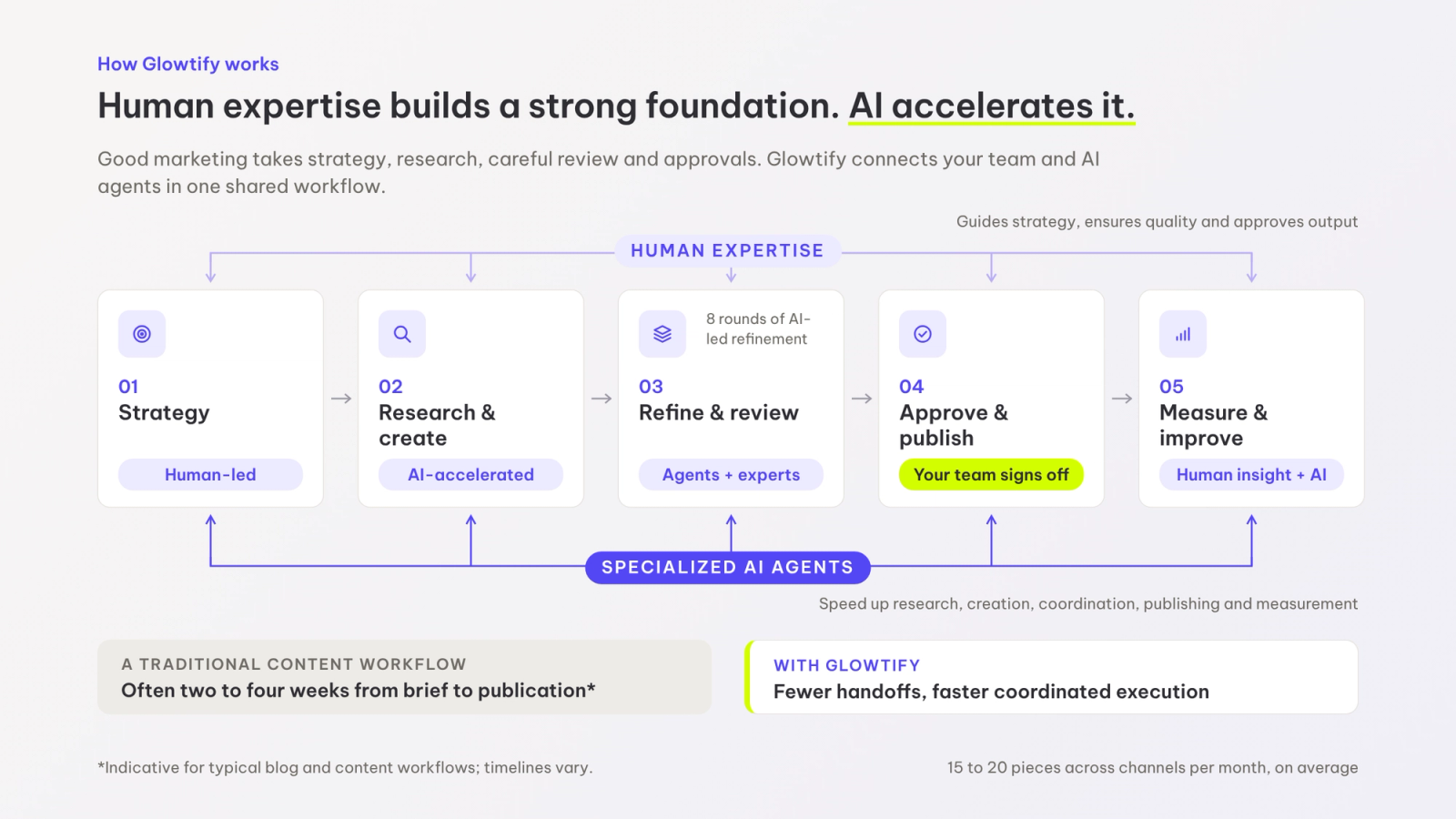
How much review a task needs depends on the risk. Anything published or sent to customers needs a careful read. Internal research and first drafts need less.
How to Try One Without Risking the Business
You don’t need to hand an agent your whole marketing operation to start. Pick one low-risk task that repeats and has a clear result.
Decide three things first: what the agent should do, what information it can use and which actions need approval. For example, have it research a topic or write a first draft, and require someone on your team to review it before anything is published.
Then track how it performs: the time it saves and how much of its work needs fixing. If it holds up, give it more. That way you test AI workflows without changing your whole marketing process at once.
How to Keep Agents Safe, Connected and On-Brand
#1 Protect Customer Data
Agents work with a lot of data, so privacy rules apply. In Canada that means PIPEDA and, in Quebec, Law 25. Selling into the US or Europe can bring in the CCPA and the GDPR. Choose agents that only access the information they need, and review what they can see on a regular schedule.
#2 Connect Them to the Tools You Use
An agent is only useful if it works with your website, CRM and email tools. Look for agents that connect without custom development, and add them one task at a time so nothing breaks.
#3 Keep Your Voice
Agents left on their own produce content that sounds like everyone else’s. Give them your business context and review their output before it goes out. In Glowtify, Business DNA gives the platform that context about your company, your offerings and your audience. Here’s how to use AI without sounding like everyone else.
Where to Start
Agents can take research, drafting and campaign adjustments off a busy team’s plate. They don’t replace the judgment of someone who knows your customers. Start with one task, keep a person approving what goes out and expand from there.
See how Glowtify plans, drafts and publishes with a person approving every piece.